
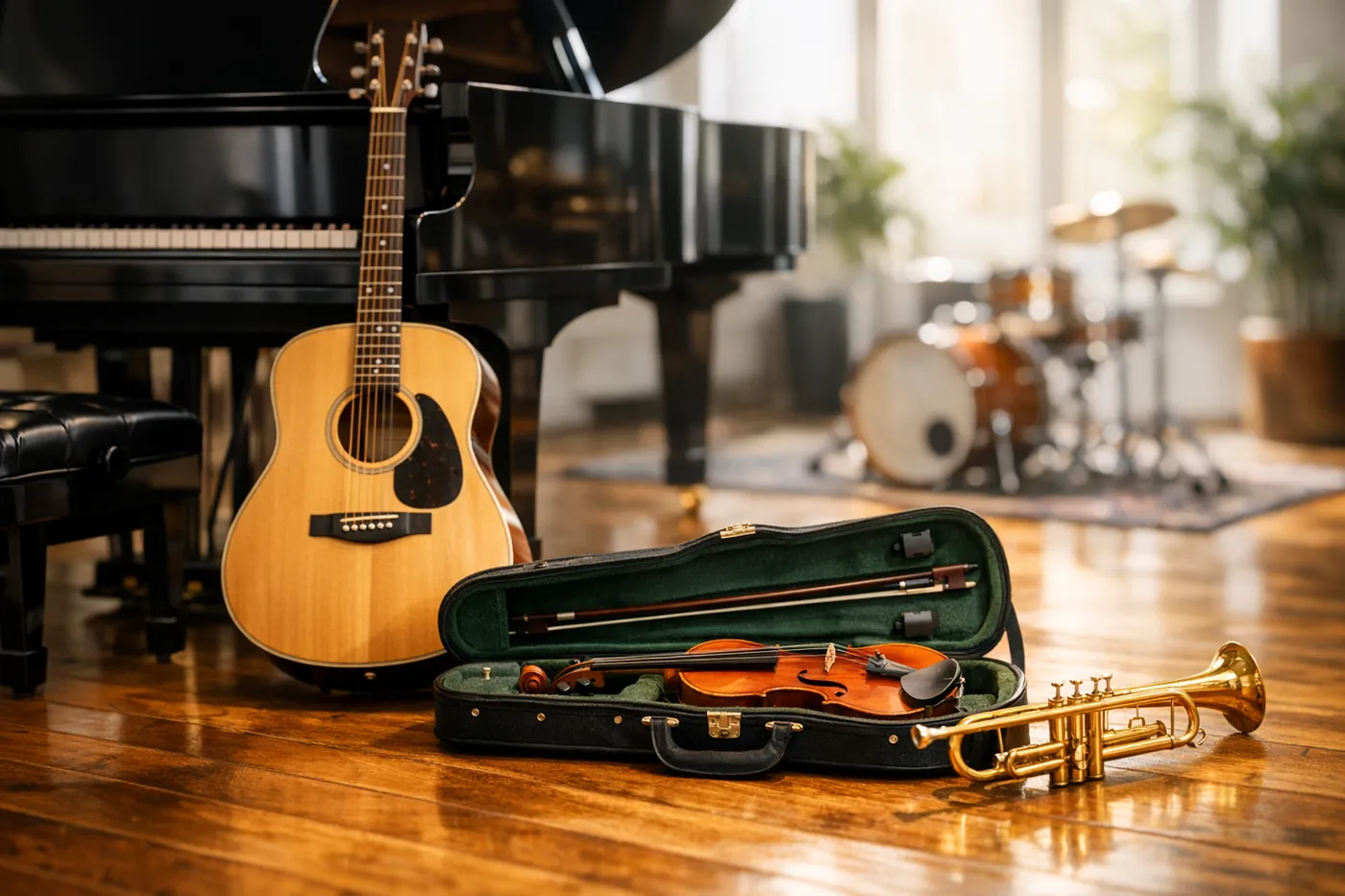
Which Instrument Suits Me?
Choosing the right instrument is one of the most important steps on your musical journey. Whether you want to learn an instrument yourself or are looking for your child – this decision affects how much joy you will get from making music.
Questions to Ask Yourself
Before you decide on an instrument, you should answer a few important questions.
What Kind of Music Do You Like?
Your taste in music is often the best guide. Do you love classical music? Then piano, violin or cello could be perfect. Are you into rock and pop? Then guitar, bass or drums might be right. Jazz fans often enjoy saxophone, trumpet or double bass.
How Much Time Do You Have to Practise?
Some instruments require more daily practice than others:
- String instruments (violin, cello): Need regular, focused practice for clean intonation
- Piano: Versatile, but requires coordination of both hands
- Guitar: Relatively quick first successes, but fingertips need time to toughen up
- Wind instruments: Require good breathing technique and regular training
What Practical Aspects Matter?
Consider:
- Space: A piano needs room; a flute fits in any bag
- Volume: Drums and trumpet can bother neighbours
- Portability: Do you need to take the instrument to music school?
- Cost: Instruments vary greatly in price (check rental options!)
Popular Instruments at a Glance
Piano
The piano is an ideal first instrument. You see the notes in front of you, the basics of music theory become clear, and you can play both melody and accompaniment.
Advantages: - No intonation issues (notes are "ready") - Versatile (classical to pop) - Good foundation for other instruments
Disadvantages: - Not portable - Relatively high purchase cost - Needs regular tuning
Guitar
The guitar is versatile and relatively easy to transport. Whether acoustic or electric – the basics are similar.
Advantages: - Quick first successes with simple chords - Great for accompanying singing - Relatively affordable
Disadvantages: - Fingertips need to toughen up first - Chord changes require practice - Many playing techniques to master
Violin
The violin is demanding but incredibly expressive. It is the centrepiece of every orchestra.
Advantages: - Very expressive - Available in various sizes (including for children) - Strong community in orchestras
Disadvantages: - Steep learning curve at the start - Intonation must be found by ear - Regular practice essential
Drums
Rhythm is the foundation of all music. Drums are fun and physically demanding.
Advantages: - Very motivating and energetic - Foundation for any band - Develops coordination
Disadvantages: - Loud – consider the neighbours! - Takes up a lot of space - E-drums as a quieter alternative
Singing
The voice is the most original of all instruments – and you always have it with you!
Advantages: - No instrument to buy - Use it anywhere - Very personal expression
Disadvantages: - Requires a good ear - Voice change in teenagers to consider - Can take courage at first
Tips for Deciding
- Try different instruments – Many music schools offer taster lessons
- Trust your gut – Which instrument draws you in?
- Talk to music teachers – They can assess your suitability
- Start with a rental instrument – Test without big commitment
- Be patient – Every instrument takes time
Conclusion
The most important rule: Choose an instrument that excites you! Motivation is the key to success. There is no "wrong" instrument – only the wrong one for you. Take your time, try things out, and let your passion guide you.
Ready to find your instrument? Discover music schools in Berlin and book a taster lesson!
Your feedback
Was this article helpful? Vote and leave a comment.